• August 2025 was a busy month for us – and the rest of 2025 is shaping up to be even busier!
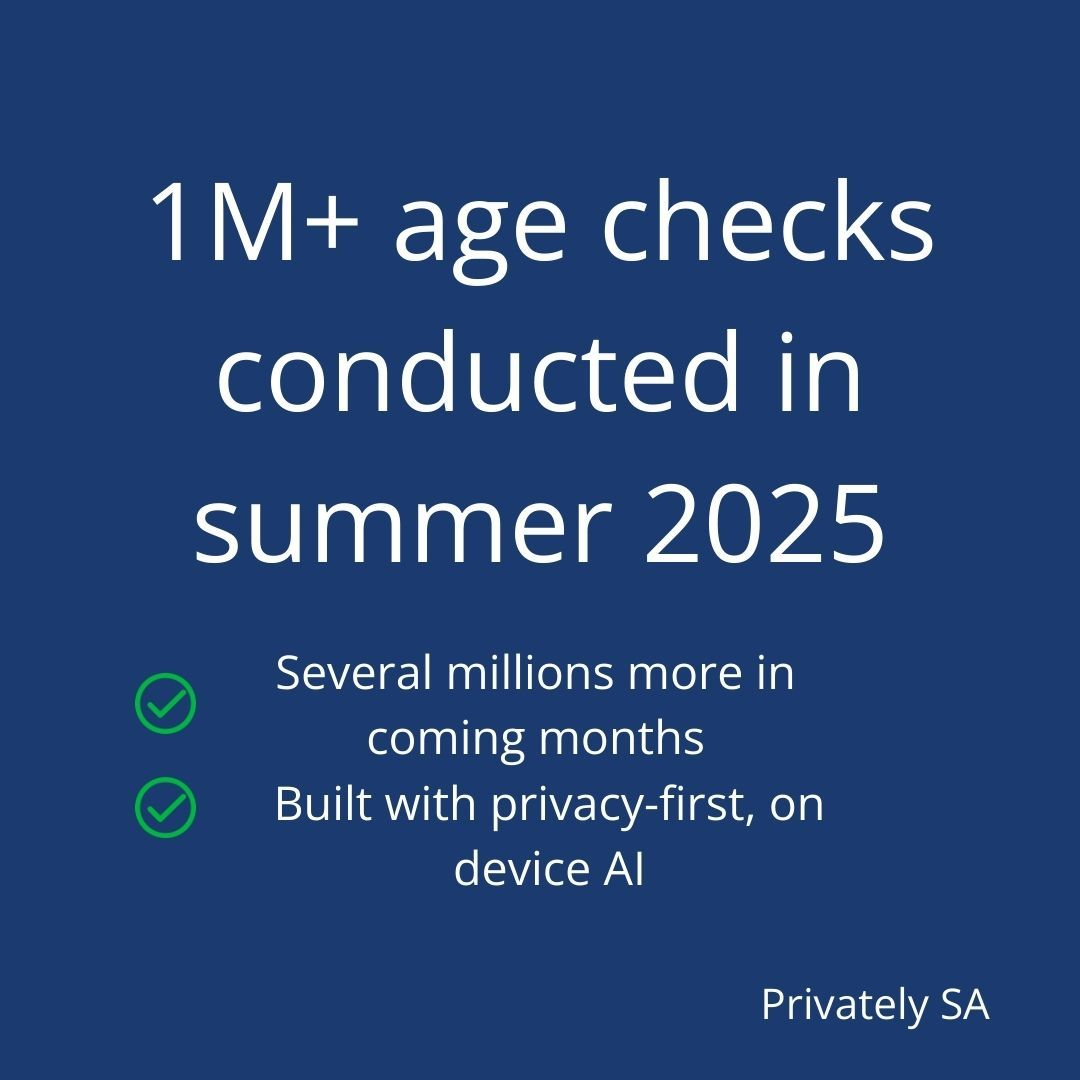
    I’m humbled to share that our facial age estimation product has reached 1 million transactions. This milestone represents more than just a number: it reflects the trust of our partners and users, and it validates the hard work that went into making an accurate, secure, and efficient solution that runs entirely on-device.

    Why On-Device Matters

    From day one, we believed that privacy, speed, and accessibility were non-negotiable for any age verification technology. By ensuring all PII-related computations happen locally on the device, we eliminate the need to send sensitive facial data to the cloud. This approach protects user privacy, and makes it acceptable for regulators worldwide.

    The Industry Context

    The field of facial AI has been evolving rapidly, with growing conversations around:

    • Privacy and data sovereignty: Regulations like GDPR and other regional laws emphasize minimizing data sharing and storage. On-device execution aligns perfectly with this direction.
    • Edge computing adoption: From smartphones to IoT devices, edge AI is becoming mainstream, reducing dependency on centralized infrastructure.
    • Fairness and inclusivity: Researchers and regulators are increasingly focused on bias reduction and ensuring that age estimation works reliably across demographics.

    Our progress to this milestone reflects the relevance of these considerations not just for regulators and researchers, but also for businesses and end-users demanding safer, faster, and more ethical solutions.
    Looking Ahead

    We’re excited about what comes next. Some of the areas we’re focusing on include:

    • Enhanced accuracy across more diverse populations, ensuring fairness and reducing potential bias as age verification bills gradually become laws across the globe.
    • Smaller, faster models that can run on an even broader range of devices, from entry-level phones to vending machines and much more.
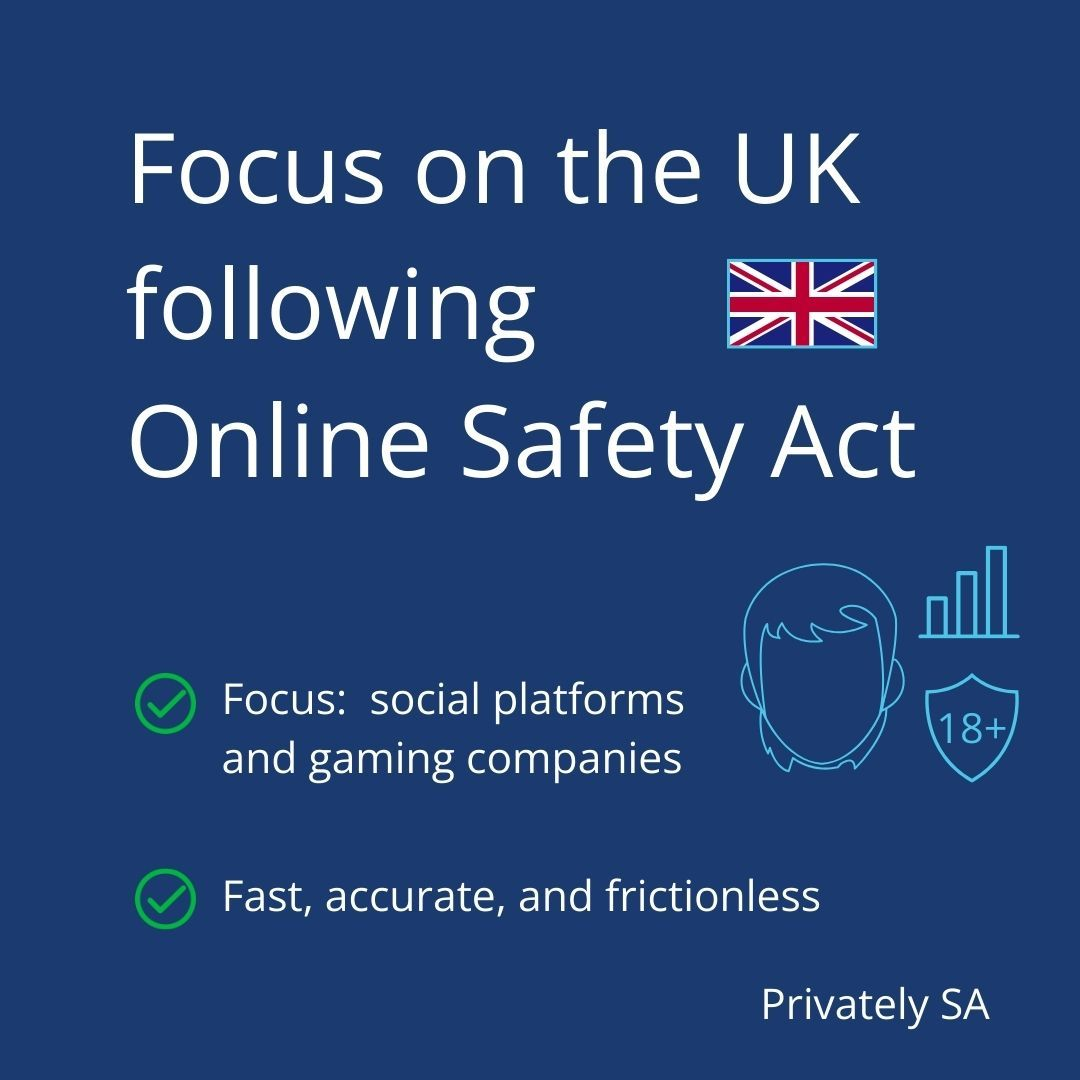
    • Expanded applications in industries such as retail, age-restricted commerce, gaming, advertisements, and digital safety.
    • Standards and transparency continue participating in shaping best practices for responsible use of facial AI.
    A Word of Thanks

    Reaching 1 million transactions is not just our achievement. It’s the result of our partners, customers, and investors who believed in the vision of on-device, privacy-first AI. Thank you for being part of this journey.

    The next million transactions will arrive faster than we imagine, and we are excited to continue building technology that is accurate, fair, and respectful of privacy.
  • #AgeAssurance technologies are gaining more visibility that they deserve. After all, age assurance is an indispensable responsibility for any business and organization that needs to implement digital safety by design for children.

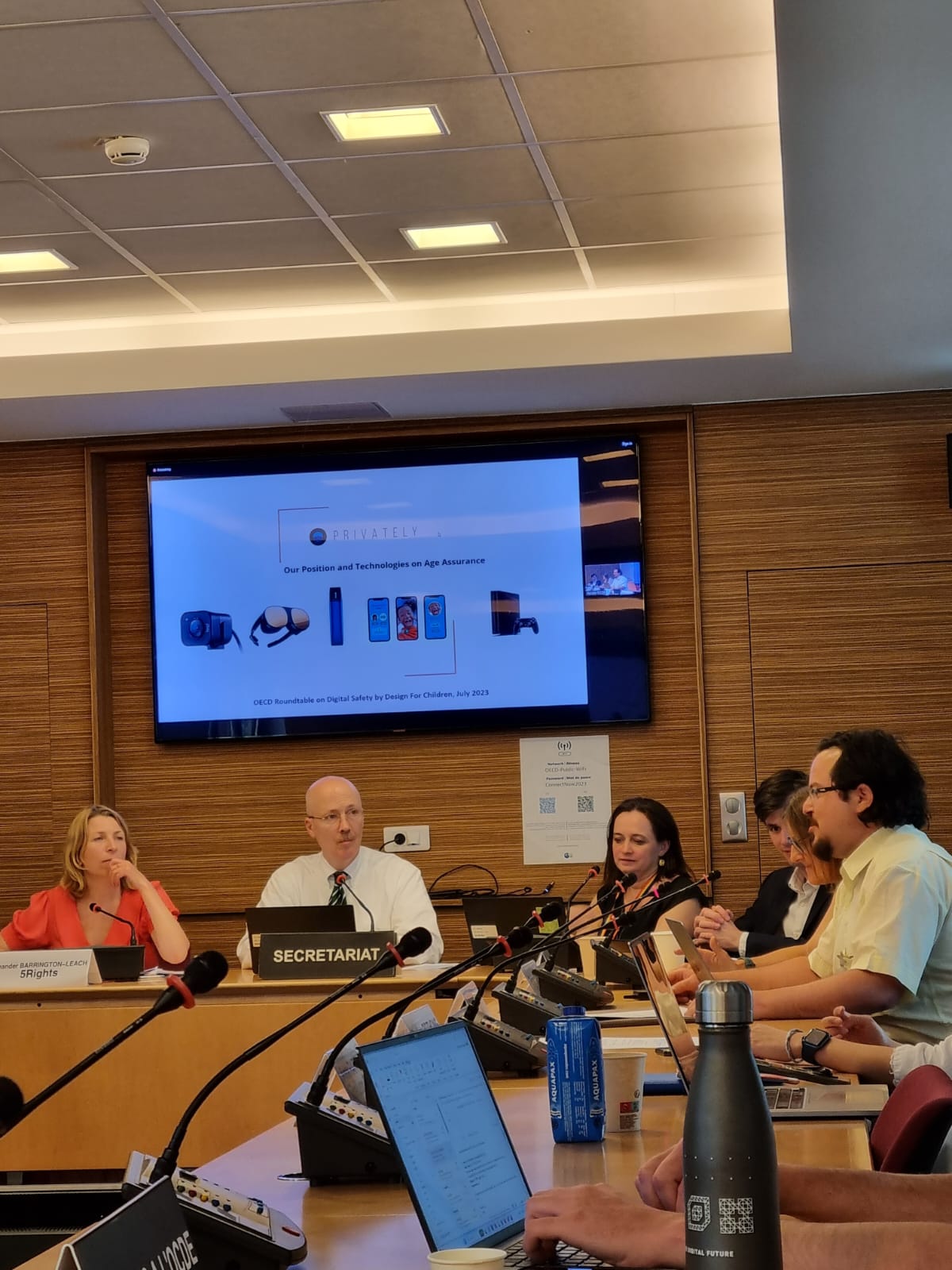
    On Friday, 07-07-2023, I had the pleasure to represent Privately SA in OECD – OCDE‘s Roundtable on Digital Safety by Design for Children. Policy experts, regulators, academics, and private enterprises have held panels for the various aspects of Digital Safety by Design: policy landscape, the best-practices, immersive technologies, and age assurance solutions.

    Privately SA was invited to this event to provide technical expertise in the panel for Age Assurance. We had shared this panel with Russell Bagnall, Liz Thomas, Julie Dawson, and Bertrand Pailhès, under the moderation of Leanda Barrington-Leach

    As a panelist, we have contributed to the draft OECD report with the following key points, which resonated strongly with all participants:

    1. For today’s age assurance needs and constraints, there already exist audited and certified solutions such as Privately’s AgeAssure. #ageverification

    2. Privately’s AgeAssure is a certified, accurate, privacy-preserving, spoof-resistant, #biometrics -based age estimation solution. It implements the Zero Data Principle, as it runs completely on the user device – no facial or voice data ever leaves the user’s device. #privacybydesign

    3. Face-based and voice-based age assurance techniques are configurable, effective, feasible, inclusive AND proportional way of age checks for most of the use cases. #inclusivity #proportionality

    4. Face recognition models learn age-invariant features to reliably identify individuals. On the other hand, age estimation models (such as our FaceAssure) learn identity-invariant features to reliably determine age. Therefore, age estimation technologies DO NOT identify individuals. #responsibleai

    5. Thanks to anonymised & aggregated #analytics from AgeAssure, we can build a future where everybody wins: policy makers can base their work on more evidence, regulators can obtain companies’ transparency reports on demand, and companies can improve their products and services with the clear conscience of not using any personally identifiable data. #privacycompliance #knowyouraudience #data

    We also noted with great satisfaction that regulators continue to coordinate their efforts. This makes it easier to comply with privacy regulations across the globe. And, with responsible innovation, platforms and technology providers will deliver online experiences with digital safety for design for children. #responsibleinnovation We thank everyone who took part in the discussions with their expertise and excellent questions. We look forward to fostering our collaborations!

    Special thanks to Jeremy West, Andras Molnar and Lisa Robinson for the organization.

  • On 18-19 April 2023, we participated in biometrics workshop organized by Idiap Research Institute and European Association for Biometrics. There we had the opportunity to exchange knowledge with leading Academic, Industrial, and State experts: on the best practices on processing, securing, and respecting the data privacy with biometrics, as well as the DeepFakes, presentation attacks, video injections, and their corresponding alleviations. We presented our company’s approach in addressing these challenges, which have been received very positively by these valuable experts.

    Indeed, Presentation Attacks, Deep Fakes, Morphing attacks, Video Injection attacks, etc. have been evolving for a long time. This has recently created some hype in public conversations, and some even haphazardly suggested dropping biometric checks altogether in age assurance. In stark contrast to these perceptions, these attack vectors have been in the radar of biometrics experts for many years, and they have been studied very well. The countermeasures evolve faster than the problems can spread, and they are available for industry players to apply.

    Indeed, Privately SA’s age estimation technology has its roots in rigorous research, in collaboration with IDIAP and EPFL. Our on-device, real-time liveness check architecture is resilient by design to many such attacks, especially video injection and Deepfakes. When it comes to determining the age of a user, we see that biometrics-based solutions are very well suited – and we’ve got our UKGDPR, EAL2, EAL1 certifications and regulator audits to prove it. Biometrics-based age estimation also works much better than other approaches – self-declaration, credit cards, database checks on phone numbers/credit scores, etc. have their own problems in efficacy and privacy, and they’re much easier to be spoofed by malicious actors.

    Thank you Dinusha Frings, Marcela Hernandez, and Sébastien Marcel for the organization of the workshop, and we’re looking forward to many fruitful exchanges in this domain.

    #biometrics #antispoof #livenesscheck #privacybydesign #deepfakes #ageassurance #ageverification #presentationattacks #ai #ageestimation #gdprcompliant #gdpr

  • Artificial intelligence is becoming increasingly critical to develop innovative, competitive and differentiated medical businesses and products. Unfortunately, AI projects may fail, due to lack of proper vision, guidance, and data strategy. Deployed AI solutions always contain a degree of human and societal biases that may influence the results. Such risks bear consequences for organizations in terms of financial loss, company reputation, and beyond.

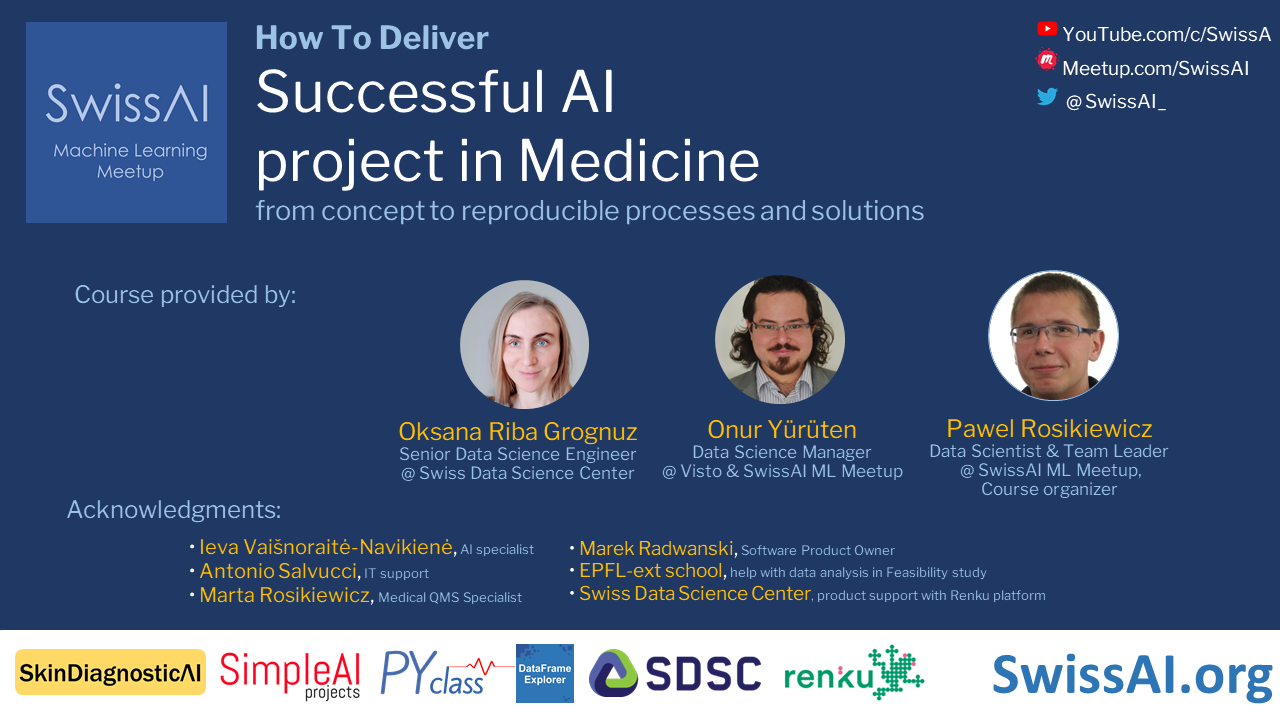
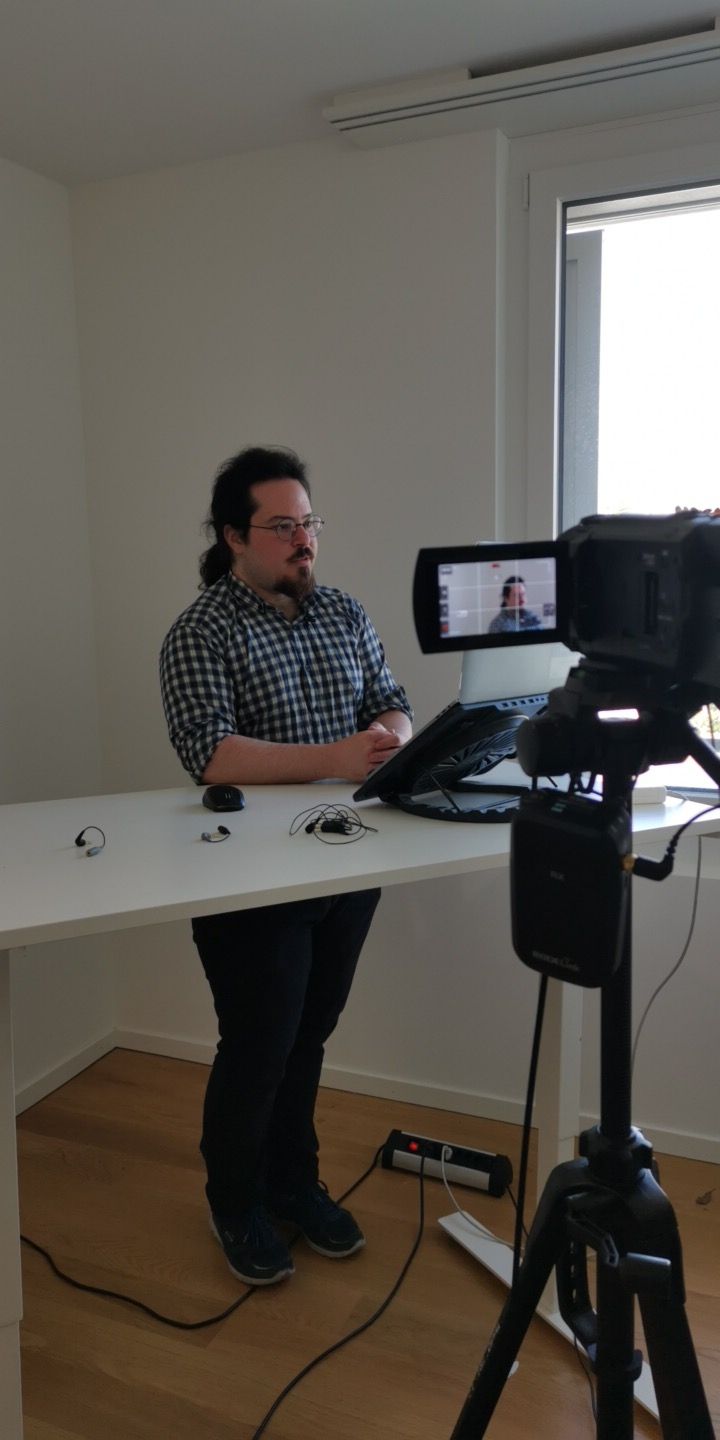
    On 27-04-2021, within the programme of Applied Machine Learning Days 2021, I have delivered a full-day workshop with the title “How to Deliver Successful AI Projects in Medicine”. The workshop was delivered online, bearing in mind the precautions against COVID. I had the privilege to collaborate with Pawel Rosikiewicz and Oksana Riba Grognuz, my co-associates from SwissAI.

    Photo Credit: Pawel Rosikiewicz

    The workshop addressed several considerations for successful AI projects, such as:

    • How to Innovate and differentiate through AI projects?
    • What are the main challenges in AI projects?
    • How to mitigate risks associated with AI?
    • How to estimate the required resources (timeline, budget, team size)?
    • Why do we need to address cognitive biases of users and how to do this?

    In this workshop, we have also premiered the AI Readiness Assessment Matrix, a self-reflection tool intended for organizations who wish to start or continue implementing an AI system. With this tool, they can assess the level of readiness of their business, product, and data infrastructure for AI; and further identify the potential actions to improve their readiness (and hence the feasibility) of their AI project.

    The AI Feasibility Assessment Canvas, reference: https://onuryuruten.com/ai-readiness-assessment/

    Much of the content will be primarily available to AMLD participants; however, don’t hesitate to get in touch if you’re interested in similar content!